

ACC&D Projects
Overcoming Public Policy Barriers to Implement Non-Surgical Sterilization

Non-surgical fertility control is an area where science, animal welfare, and public policy cross paths. As non-surgical products become available, it is essential that they can succeed not only from a scientific standpoint, but also a public policy one.
We are working to ensure that when non-surgical sterilants become available, use of these lifesaving products will not be hindered by barriers such as ambiguous laws or outdated policies.
Identifying public policy barriers
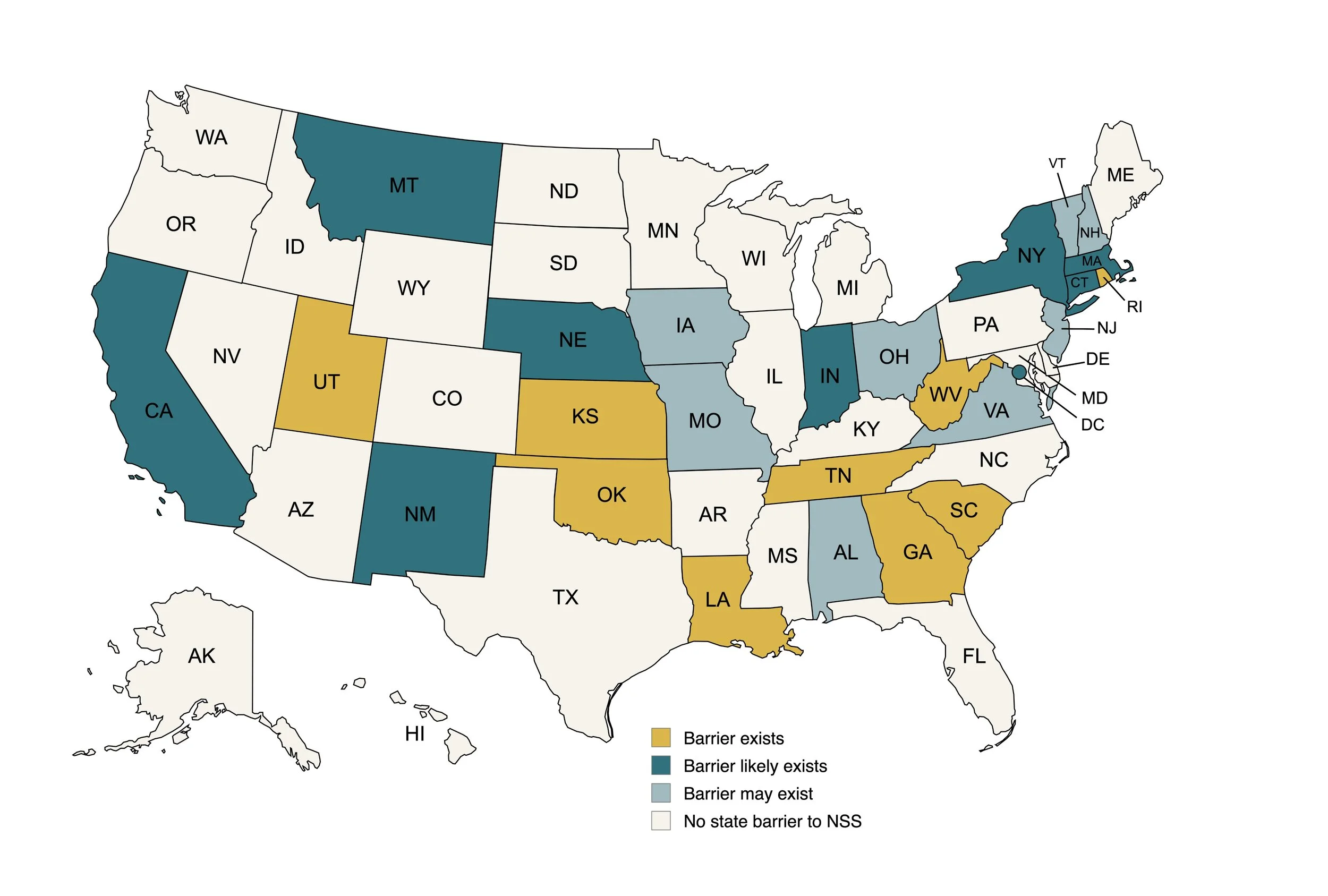
Map showing where statewide public policy barriers have the potential to interfere with implementing non-surgical fertility control as a legal alternative to spay or neuter.
Legal definitions of what constitutes sterilization for dogs and cats vary by local, municipal, and state regulations. These legal definitions and provisions designate whether non-surgical fertility control is a legal alternative to surgical sterilization. However, some of the legal definitions regarding dog and cat sterilization at municipal shelters are not clearly defined, or the law is silent.
The majority of the state-level legal definitions mandate the sterilization of animals adopted from shelters.
For example:
Approximately 70% of all states require that dogs and cats adopted from shelters be sterilized or spayed or neutered, unless exempted as a condition of adoption.
Around 30% of states do not require dogs and cats adopted from the shelter to be sterilized
In 12 states, non-surgical fertility control is a legally valid alternative to surgical sterilization
11 states explicitly define dog and cat sterilization as surgical methods for either one or both sexes
8 states require dogs and cats adopted from shelters to be spayed or neutered but do not provide specifics about surgical or non-surgical fertility control techniques
While this is not a problem at the moment, the lack of specificity in these statewide policies could become problematic once a non-surgical sterilant becomes available, particularly for shelters seeking to non-surgically sterilize adoptable animals. For example, among the 30% of states that do not require adopted dogs or cats to be sterilized, none have adopted policies clarifying whether non-surgical fertility control methods are legal alternatives to surgical sterilization. In addition, most of these states allow local municipalities to define and regulate the sterilization of dogs and cats for licensing, adoption requirements, housing, and other purposes. Without clear state-level guidance, this could create a patchwork of local policies governing which sterilization methods are considered acceptable, limiting the use of non-surgical options.
Summary of State Policy Barriers to Non-Surgical Fertility Control
Below is a downloadable chart that indicates where individual state laws and policies may present barriers to implementing non-surgical fertility control as a legally valid alternative to surgical sterilization.
Collaborating for a Change
From 2013 onwards, ACC&D has been working with U.S. organizations to support legislation to address potential and current barriers to implementing non-surgical fertility control options.
For example, over a decade ago, ACC&D approached the American Society for the Prevention of Cruelty to Animals (ASPCA) to evaluate U.S. state and local definitions of animal sterilization and state requirements for sterilization of shelter and adopted animals. The ASPCA presented this information at ACC&D’s 5th International Symposium.
Since then, in partnership with the ASPCA, Humane World for Animals, and Best Friends Animal Society, we have continued to update the policy information as well as identify and address the barriers to non-surgical options found in statewide laws and policies, and those exist in ordinances in major U.S. cities.
A PUBLIC POLICY VICTORY
Thanks to dedicated efforts from all, we have already achieved a positive policy success. In an effort led by Best Friends Animal Society, Illinois successfully amended its Animal Control Act in 2021 to replace references to “spaying and neutering” with “sterilizing” to remove any doubt that non-surgical sterilization is a valid legal alternative to surgical sterilization.
Check out the article by Best Friends Animal Society on the legislation results here.